
A flat tattoo reference can look perfect on a screen and still fail on the body. The reason is simple: skin is not a poster. It bends around bone, stretches over muscle, folds near joints, and is seen from different angles as you move. That is why good tattoo placement starts before the stencil, especially if you are using an AI tattoo generator or a tattoo design maker to explore ideas.
A useful tattoo planning tool should do more than make an attractive flat image. The real test is whether the idea still works at the chosen size, follows the body naturally, and gives a tattoo artist enough clarity to adapt it for skin.
Start With Placement, Not Subject
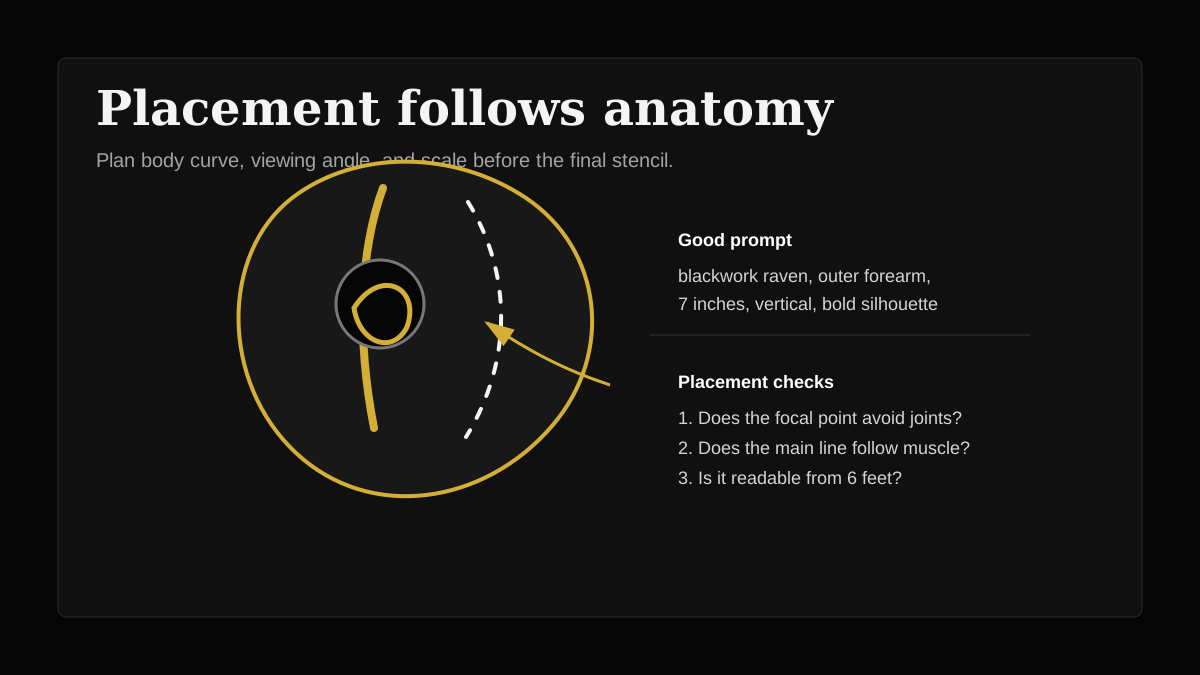
Many first prompts start with a subject: wolf, dragon, rose, angel number, family name. A better prompt starts with the body area. “Fine-line wolf for inner forearm” and “blackwork wolf shoulder cap” are different tattoo problems. The same subject needs different line weight, composition, and empty space depending on where it sits.
| Placement | Works Well For | Watch For |
|---|---|---|
| Forearm | Lettering, fine-line symbols, medium portraits | Twist can bend straight text and narrow faces |
| Shoulder | Circular mandalas, florals, animals, armor shapes | Design should wrap around the deltoid instead of floating |
| Ribs | Script, vertical botanicals, long ornamental pieces | Breathing movement and pain can limit session length |
| Calf | Bold illustrative work, animals, geometric pieces | Back-of-leg designs need enough contrast to read from distance |
| Back | Large compositions, wings, Japanese backgrounds | Small isolated designs may look lost without framing |
How to Test Body Flow in a Virtual Tattoo Try-On
- Upload a straight, well-lit photo with enough surrounding skin visible.
- Test the design at the size you would actually tattoo, then check it from normal viewing distance.
- Rotate or reposition the design until its main line follows the muscle or bone direction.
- Avoid placing important faces, eyes, names, or dates directly on high-bend zones.
- Save two or three previews to bring to the artist as placement references, not final stencil art.
The Sticker Effect: Why Designs Look Pasted On
The sticker effect happens when a design ignores anatomy. A rectangle on the bicep, a face split by the elbow crease, or script that bends around the wrist can all make the tattoo feel separate from the body. A strong tattoo looks designed with the limb, not dropped onto it.
For AI generated references, the most common fix is simplifying the outer silhouette. A large, clean shape usually adapts better than many tiny floating details. If the design needs every small element to make sense, it may need a larger placement or a different style.
Placement Rules for AI Tattoo Generator Users
- Ask for fewer details on small placements under 3 inches.
- Use bolder contrast for outer arm, calf, back, and chest pieces.
- Reserve micro detail for areas that do not bend heavily.
- Keep lettering on flatter zones when readability matters.
- Use virtual tattoo try-on to compare two sizes before choosing the final direction.
FAQ
What is the best placement for a first tattoo?
Forearm, upper arm, shoulder, calf, and ankle are common first tattoo placements because they are easier to preview and size. The best choice depends on visibility, pain tolerance, design detail, and whether the art needs to wrap with the body.
Can I design a tattoo online free and bring it to an artist?
Yes. Treat the online design as a reference. A tattoo artist should adjust the composition for skin, stencil clarity, line weight, and aging before it becomes the final tattoo.
Why does a tattoo look different on my body than on paper?
Paper is flat, but the body has curves, shadows, joints, and movement. Placement can stretch or compress shapes, so a design needs to be previewed at real scale on the body area where it will sit.

